

Board of Advocates Lead Conversations on Rural Food Access

This month, we welcomed our newest class of Board of Advocates at our spring meeting in Washington, D.C. While in the nation’s capital, members engaged with corporate partners, Senate leaders, philanthropic foundations, and USDA officials to examine how recent policy shifts are affecting individuals and families experiencing hunger — both domestically and globally. Conversations also focused on the urgent need for targeted interventions in rural communities, where access to fresh, healthy food remains limited and often out of reach.
At a time when federal nutrition programs face ongoing scrutiny and rural communities continue to experience disproportionate barriers to food access, these conversations are more than timely — they are essential. Policy decisions made in Washington shape what is possible in local communities, influencing everything from the accessibility of SNAP benefits to investments in food retail infrastructure, transportation access, and global nutrition assistance. Ensuring these decisions are informed by evidence and grounded in real-world experience remains a central priority of our work.
Ambassadors for Sustainable Hunger Solutions
Our Board of Advocates brings a distinctive cross-sector perspective to this dialogue. Representing business, philanthropy, nonprofit and public leadership, and community engagement, members serve as trusted advisors and ambassadors for sustainable hunger solutions. They help bridge the gap between policy and practice — elevating the lived realities of families facing food insecurity while also identifying innovative partnerships that can strengthen food systems in underserved areas.

Incoming board chair, Tariq Thowfeek, reflected, “This week reminded me that the real strength of this board is the mix of people around the table and the care they bring to the work. As we dug into the rural intervention we discussed and the research behind it, I kept coming back to a simple truth: hunger is complicated, but it is not beyond our reach. If we are willing to listen closely, test what works, and stay grounded in the lives of real families, we can build programs that endure well beyond any one of us. The collective strength of our board and staff was on full display this week. It was energizing and deeply encouraging.”
Current board chair, Desiree Tucker-Sorini, agreed that there is “overwhelming excitement about addressing the needs of rural food insecurity” among the new and current board members in partnership with Hunger Collaborative staff.
Ensure Lasting Impact
Throughout the week, one theme remained clear: ending hunger requires coordinated action across sectors and sustained commitment at every level. Targeted rural interventions — whether through public-private retail partnerships or improved alignment of federal nutrition programs — must be paired with long-term policy to ensure lasting impact. Short-term solutions alone cannot address the structural barriers limiting access to affordable, nutritious food in many communities.
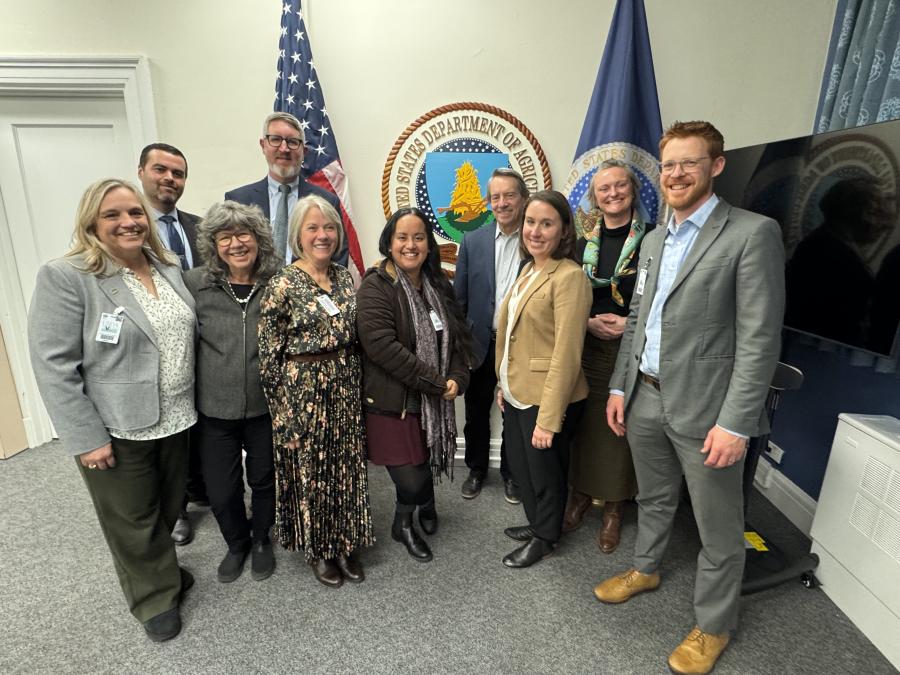
The presence of our board in Washington reinforces our commitment to ensuring policy conversations reflect both urgency and possibility. By engaging directly with decision-makers and national partners, we are strengthening relationships to translate dialogue into measurable action. These engagements not only elevate community-informed strategies but also position us to respond proactively as legislative and regulatory priorities evolve.
As we welcome this new class of advocates, we are energized by the leadership, expertise, and networks they bring to the months ahead. Together, we will continue advancing evidence-based strategies, fostering cross-sector collaboration, and advocating for policies that expand access to healthy food for families who need it most, in rural communities and beyond.
The work ahead requires persistence and partnership. With the support of our Board of Advocates, we remain committed to translating insight into action and ensuring food policy at every level advances healthy food access and long-term food security.