

Refining Purpose While At the Table with Zach Lambert
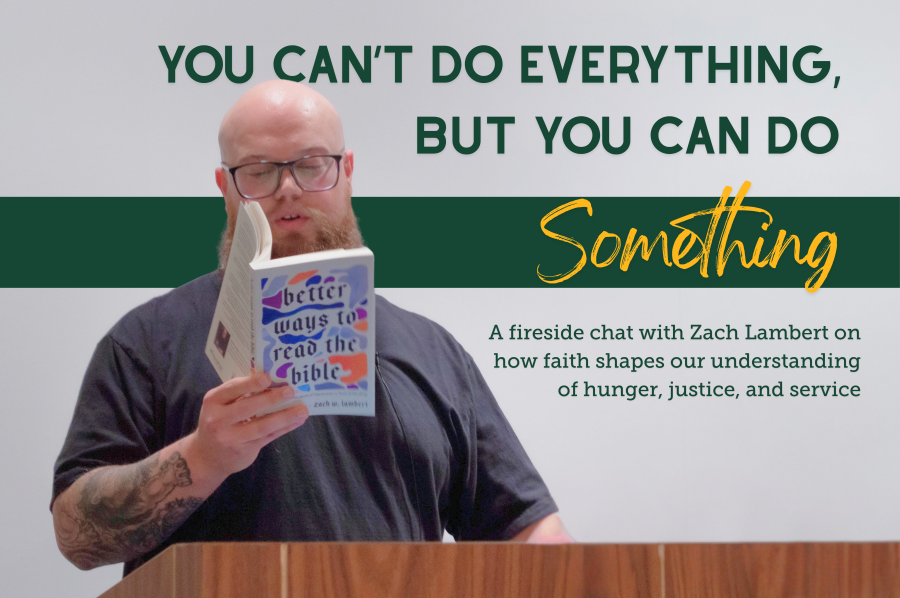
On April 16th, the Baylor Hunger Collaborative hosted Zach Lambert at the Armstrong Browning Library on Baylor’s campus to talk about how faith shapes our understanding of hunger, justice, and service. The discussion was full of themes from Zach's bestselling book, Better Ways to Read the Bible, and was moderated by Dr. Beth Allison Barr, James Vardaman Endowed Professor of History at Baylor University and bestselling author of The Making of Biblical Womanhood and Becoming the Pastor's Wife.
At the Hunger Collaborative, we welcome a diversity of thought in how to address social injustices, and we were honored to learn about how Zach’s faith perspective informed his approach to caring for those experiencing hunger and poverty.
You can’t do everything, but you can do something
Zach noted at the end of his introductory remarks. “And when you do [something], it’s like a stone that’s dropped in water, where every single act of justice sends ripples far beyond what we can see.”
More than anything, Zach and Dr. Barr’s conversation was about what a wholistic, Christian approach to human flourishing looks like. Zach often called back to the “tragically relevant” history of apartheid in South Africa, when so many Christians stayed on the sidelines, making a “virtue of neutrality.” Too often, Zach said, Christians see meeting the needs of the poor and hungry as secondary, neglecting the mission for Christians called out in John 10:10: “The thief comes only to steal and kill and destroy; I have come that they may have life, and have it to the full.”
Christians, Lambert said, are called to help people flourish even when they are overwhelmed by the injustice happening in the world.
“You can’t do everything, but you can do something.” Whether connecting with local nonprofits serving the marginalized already, meeting a need not yet addressed in your community, or gathering at a table to eat and meet with groups affected by injustice, every person’s actions make a difference. But always remember, Lambert and Barr noted at the end of their discussion, to notice how systems of power, privilege, and oppression play into day-to-day life and apply what you see to how you read your Bible. When you do this, you resist the temptation to ideologically agree but take no action towards participating in Jesus' work and pave a way forward to prophetically call out injustice and call for redemption.