

A Roadmap to Addressing Hunger in Your Community
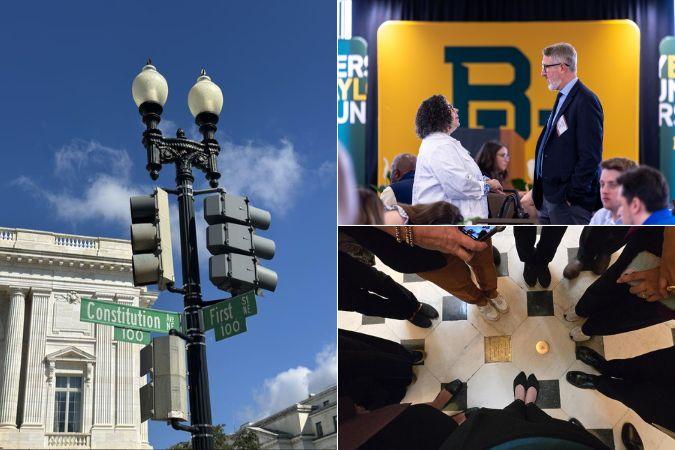
Ending hunger takes more than good intentions—it takes committed people working together with a shared vision. That’s the heart of a Hunger Free Community Coalition (HFCC): a network of neighbors, organizations, and leaders joining forces to expand access to food and build lasting solutions to food insecurity.
Last year the Baylor Hunger Collaborative launched an exciting new initiative to support this work: the Hunger Free Communities Two-Year Intensive. Designed for communities ready to take meaningful action, this program equips local leaders with the tools, relationships, and expertise needed to create strong, sustainable coalitions.
Learning and Leading Together
The Two-Year Intensive is built around six interactive learning experiences. In its first year, the Hunger Collaborative welcomed its inaugural cohorts and guided them through the first four key elements:
- Forming a Community Leadership Council
- Attending the Together at the Table: Hunger and Poverty Summit at Baylor University
- Participating in the Hunger Collaborative’s Food Security Policy Workshop in Washington, D.C.
- Completing the online Hunger Free Communities Certificate Course.
In the year ahead, these dedicated leaders will complete the final two elements: hosting a community-wide HFCC launch event and strengthening their coalitions through ongoing, personalized coaching and support from the Baylor Hunger Collaborative.
Forming a Community Leadership Council
Communities from across Texas—based in Galveston, Nacogdoches, Amarillo, and West Texas—joined the first year of the program, each forming a Community Leadership Council (CLC) to guide their local efforts. These councils include nurses, county judges, professors, ministers, nonprofit volunteers, and many others, each bringing unique perspectives and a shared commitment to change.
Despite their different backgrounds, participants are united by common goals:
“[To m]ake community coalitions more focused, impactful, and sustainable.”
“[T]o bring diverse stakeholders together and foster strong community partnerships.”
Together at the Table Summit

In April, CLC members gathered at either the Together at the Table: Hunger and Poverty Summit in Waco or the West Texas Hunger Summit in San Angelo, connecting with professionals from across the country. Through workshops, conversations, and inspiring speakers, participants gained new ideas and renewed energy for their work back home.
Food Security Policy Workshop in Washington, D.C.
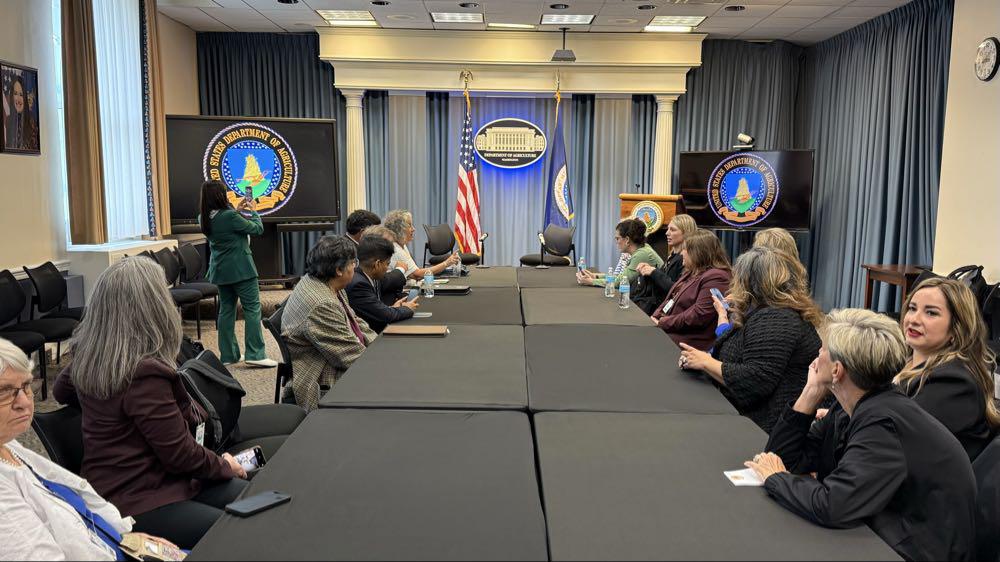
In September, 28 CLC members representing 14 Texas counties traveled to Washington, D.C. for the Hunger Collaborative’s Food Security Policy Workshop—many visiting the nation’s capital for the first time. There, they met with food security advocates, federal agencies such as USDA, and national partners like Bread for the World.
For many, the experience was transformative. As one participant shared, the trip was “such an amazing opportunity to learn more about policy and how we all need to have a seat at the table to make a difference.”
Hunger Free Communities Online Certificate Course
Building on these experiences, participants then began the online Hunger Free Communities Certificate Course. Developed through the Baylor Hunger Collaborative’s 17 years of experience, this eight-module course offers engaging lessons, interactive activities, and practical tools for community action.
The course deepened participants’ understanding of food insecurity and strengthened their ability to create strategic, coordinated responses. One learner reflected, “[The course’s] interdisciplinary perspective deepened my appreciation for the complexity of hunger issues and underscored the importance of coordinated community action for impactful change.”
Looking Ahead: Turning Knowledge into Action
This year, Community Leadership Councils are putting their learning into practice. Using the foundation built through the first four program events, they are planning and hosting community-wide HFCC launch events, inviting neighbors, partners, and organizations to join in the work of ending hunger locally. As one participant shared, the training gave them “a roadmap for us to follow. We don’t have to figure out what to do next – just how to do the next step.”
Together, these dedicated leaders are building stronger, more connected communities—and bringing us closer to a future where everyone has reliable access to nutritious food.
Interested in taking the next step? Email us at Collaborative@baylor.edu.
Follow us on Facebook, LinkedIn, and Instagram @BaylorCollaborative